Standing water in your yard can be frustrating, especially when it keeps coming back after every heavy rain. Soft soil, washed-out areas, muddy paths, and water near your foundation can all be signs that your property needs a better drainage plan.
Two common yard drainage solutions are French drains and dry creek beds. Both can help move water away from problem areas, but they are designed for different types of drainage issues. Understanding the difference can help you make a more confident decision before investing in excavation or drainage work.
French Drains: Best for Water Below the Surface
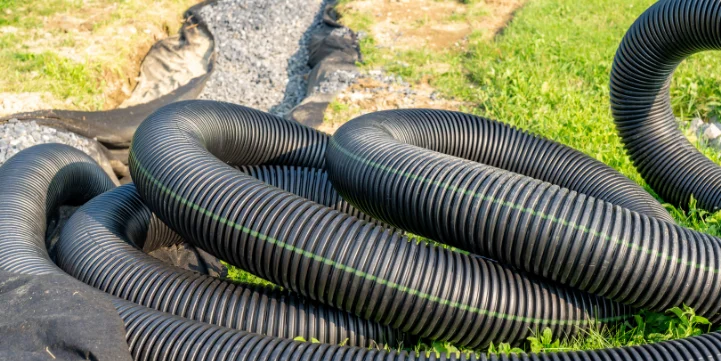
A French drain is an underground drainage system that collects excess water and redirects it to a safer discharge area. It usually includes a trench, gravel, perforated pipe, filter fabric, and a properly planned outlet where the water can flow away from your yard, foundation, driveway, or low areas.
French drains are often recommended when water is sitting below the surface or repeatedly soaking into the same area. Since this type of system depends on trench depth, slope, pipe placement, and backfill, professional installation can make a significant difference in its performance.
A French drain may be the right choice if you are dealing with:
- Standing water that lingers after rain
- Wet areas near a foundation or basement wall
- Soggy lawn sections caused by poor subsurface drainage
- Water collecting along driveways, walkways, or low spots
- Drainage problems that need a buried, long-term solution
French drain installation cost can vary based on trench length, depth, soil conditions, pipe size, gravel, outlet location, and access for excavation equipment. A professional assessment can help you understand what your property actually needs so you are not paying for a drainage system that is too small, too shallow, or placed in the wrong area.
Dry Creek Beds: Best for Surface Runoff
A dry creek bed is a shallow, rock-lined channel that helps guide surface water through the yard. It can also create a natural-looking landscape feature while providing stormwater a clearer path. Dry creek beds are usually best for water that moves across the surface during rain instead of water that stays trapped underground. They can work well on sloped yards, near landscape beds, below downspouts, or in areas where runoff is starting to wash out soil or mulch.
A dry creek bed may be the right choice if you are dealing with:
- Surface runoff during heavy rain
- Minor erosion across lawn or landscape areas
- Water flowing from slopes, downspouts, or hard surfaces
- Landscape areas that need both drainage and visual appeal
- Shallow water movement that does not require buried pipe
Dry creek beds can be a helpful option when the drainage solution needs to look natural and blend into the property. The design still matters, though, because the channel must be shaped and directed correctly so that water moves away rather than spreading into another low spot.
French Drain vs. Dry Creek Bed: Side-by-Side Comparison
The main difference is where the water problem is happening. A French drain handles water below the surface, while a dry creek bed manages water moving across the surface. If your yard stays soggy for days, a French drain is usually the stronger option, while a dry creek bed may be enough if water only rushes across the yard during storms and drains away afterward.
| Drainage Issue | Better Option | Why It Works |
| Water sits in the lawn for days | French drain | Collects and redirects subsurface water |
| Water flows across the yard during rain | Dry creek bed | Creates a surface path for runoff |
| Water collects near the foundation | French drain | Moves water away below grade |
| Shallow erosion is forming | Dry creek bed | Slows and guides surface flow |
| Yard has both soggy soil and runoff | Combined solution | Manages surface and underground water |
| Downspouts are causing washouts | Dry creek bed or combined solution | Guides roof runoff through a planned path |
| Low spots stay muddy after storms | French drain or grading | Removes trapped water and improves flow |
How to Choose the Best Yard Drainage Option
The best yard drainage option starts with finding the source of the water. A wet yard may look like a simple surface problem, but the real issue could be poor grading, compacted soil, underground saturation, roof runoff, or water moving from another part of the property.
A professional drainage evaluation can help identify the cause of the problem before work begins. This is especially helpful if water is near your foundation, affecting access areas, washing out soil, or creating repeated muddy spots after rain.
Ask these questions before choosing:
- Does water sit for days or only during rainfall?
- Is the water coming from a slope, roofline, driveway, or low spot?
- Is the foundation, basement, or crawl space affected?
- Does the yard need underground drainage or surface runoff control?
- Is erosion already forming in the drainage path?
Some properties need more than one solution. A French drain can collect groundwater, while a dry creek bed can guide surface runoff during heavy rain. In some cases, grading, culverts, foundation drains, or erosion control measures may also be needed to complete a drainage plan.
Get Professional Help With Yard Drainage
French drains and dry creek beds can both solve yard drainage problems, but they are not interchangeable. A French drain is usually better for wet soil and standing water, while a dry creek bed is better for visible runoff and shallow erosion.
If you are not sure which option your yard needs, Western Excavation can inspect your property and identify the source of the issue. Our team handles French drains, foundation drains, culverts, grading, erosion control, and other excavation-based drainage solutions to help move water away from the areas it can damage. Contact us today to schedule a drainage assessment and get help choosing the right solution for your property.