
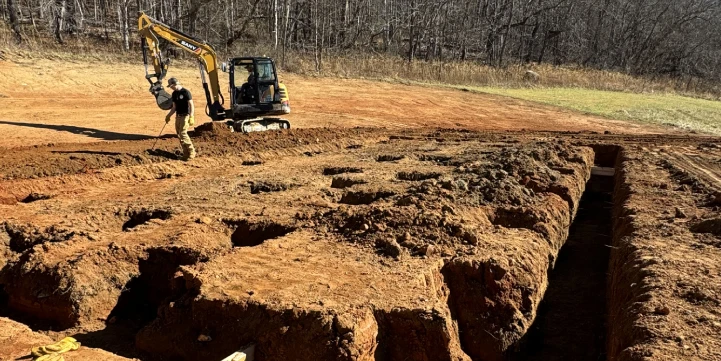
When the cold weather moves in, you want to avoid water pooling, freezing or damaging your construction site or property. Preparing your drainage system before winter isn’t just smart, it prevents expensive damage, keeps your site safe, and ensures everything flows as it should when the temperatures drop. Clearing debris, checking for leaks, improving grading and insulating exposed pipes are the key steps to get your site ready.
1. Clear Debris and Check Drains
Fall leaves, dirt and leftover summer clutter can clog your site’s drainage faster than you’d expect. Before winter hits, get ahead of it. Start with:
- Gutters and downspouts: Make sure they’re completely clear and water can flow freely.
- Surface drains and grates: Remove any buildup of leaves, mulch or silt.
- Catch basins and storm drains: Flush them and inspect for blockages.
Once freezing temperatures hit, any backed‑up water can freeze solid and damage the system. Avoid winter flooding by doing this now.
2. Inspect and Repair Drainage Systems
A quick inspection now can save you from costly repairs later. Walk the site and take a good look at the entire drainage system. Here’s what to do:
- Check for cracks or holes in visible pipes and drain lines.
- Run water through downspouts and drain lines to see how it flows.
- Look for signs of slow drainage or pooling water.
- Confirm that sump pumps or other systems are working properly.
If something seems off, fix it before the ground freezes. Water that freezes expands, which can make cracks worse quickly.
3. Correct Grading and Water Flow Direction
Your drainage system is only as good as your grading. If your site isn’t sloped correctly, water will pool in all the wrong places. Make sure:
- The land slopes away from buildings and structures.
- Any low points are drained using proper systems.
- French drains or swales are in place where necessary.
- There are no compacted areas trapping water.
Poor grading can create ice hazards, erode soil or damage your foundation. A quick walk‑through after rain can help you spot problem zones before snow adds more weight and moisture.
4. Protect Exposed Pipes and Drain Lines
Not every pipe is buried deep enough to handle winter temps on its own. If it’s exposed, it’s at risk. Protect your lines with:
- Insulation sleeves or foam wraps for exposed pipes.
- Pipe‑heating cables if the line is critical and vulnerable.
- Drainage systems blow‑outs if you use irrigation or water‑features.
- Backflow‑prevention assemblies that are drained and insulated.
Water left in these lines can freeze, expand and crack the material — causing bursts, leaks and system failure when you least expect it.
We Are The Drainage Experts You Need
Our team at Western Excavation specializes in helping you get your site ready for whatever the weather brings. We offer expert drainage solutions, grading services and site prep that ensure your property handles water the right way, all winter long.
Whether it’s clearing out existing systems or installing proper drainage that won’t back up or freeze, we help you build with confidence. We understand local soil, climate and codes, which means your site doesn’t just meet standards; it’s protected.
Prepare Today for a Trouble‑Free Winter
Don’t wait until the first freeze to discover your drainage system needs work. Now’s the time to clear the lines, inspect everything and get your grading right. Whether you’re managing a construction site, commercial property or prepping land for development, protecting your drainage system is key.
Contact us today to schedule a drainage inspection or winter‑prep service. We’ll make sure your site is ready for anything this winter throws your way.