
Have you ever walked across your yard and felt like you were stepping on a soaked sponge? Or worse, have you had rainwater creeping dangerously close to your home’s foundation? If so, you’re not alone. Dealing with poor drainage is frustrating, and the damage it can cause is no joke. From muddy lawns to cracked foundations and flooded basements, excess water can wreak havoc on your property.
So, what’s the best way to solve the problem? Two common solutions are French drains and traditional drainage systems. But which one is right for you? Let’s break it down in a way that actually makes sense.
What is a French Drain?
A French drain might sound fancy, but it’s actually a pretty straightforward solution. It’s a trench filled with gravel that contains a perforated pipe. This pipe collects and redirects water away from problem areas, like your lawn or foundation. Think of it like a hidden underground tunnel that carries water away before it can do any damage.
How Does a French Drain Work?
When it rains, water naturally flows to the lowest point of your yard. If your soil doesn’t drain well, that water just sits there, causing problems. A French drain solves this by:
- Collecting water through a gravel-covered trench
- Guiding it into a perforated pipe
- Redirecting it away from your home, yard, or other problem areas
When Should You Choose a French Drain?
French drains work best when dealing with subsurface water problems. Here are a few situations where a French drain is a great solution:
- Your basement floods – If water is seeping into your basement after heavy rain, a French drain can help redirect that water away from your foundation.
- Your yard stays soggy – If certain areas of your yard never seem to dry out, a French drain can help move that water elsewhere.
- If you live on a slope, a French drain can change its direction if water is running toward your house rather than away from it.
Pros of a French Drain
- Hidden from view – Since it’s underground, it won’t disrupt your landscaping.
- Great for long-term drainage – Ideal for keeping water away from foundations.
- Low maintenance – When installed properly, it doesn’t require much upkeep.
Cons of a French Drain
- Installation is a project – Digging trenches and laying pipes isn’t a quick weekend DIY (unless you love a challenge!).
- Can clog over time – If not installed with a proper filter, dirt and debris can block the pipes.
- Not ideal for heavy surface water – It’s better for handling underground water rather than big puddles on the surface.
What is a Traditional Drainage System?
Traditional drainage systems, also known as surface drains or trench drains, are designed to remove visible surface water. Instead of being hidden underground like a French drain, these systems are installed at ground level to quickly collect and move excess water away.
How Does a Traditional Drainage System Work?
- Water enters through an opening (like a grated drain in your yard, driveway, or patio).
- It flows through a system of underground pipes.
- The water is discharged to a safe location (like a storm drain or a designated drainage area).
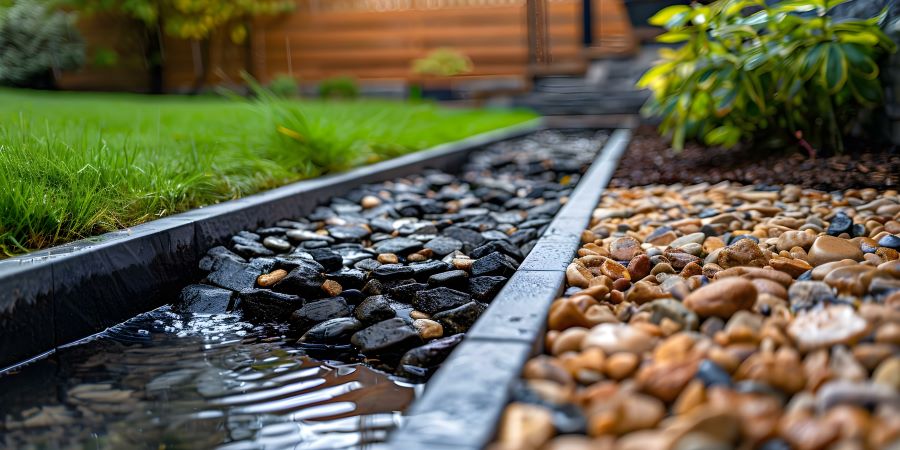
When Should You Choose a Traditional Drainage System?
A traditional drainage system is your best bet if you have issues with surface water pooling rather than underground water saturation. Here’s when you might need one:
- Your driveway or patio floods – If rainwater collects on hard surfaces, a grated drain can move it away quickly.
- You get standing water in your yard – If you find giant puddles after every rainstorm, surface drains can collect and redirect that water.
- You have an area with poor slope – If certain parts of your yard don’t naturally drain downhill, a surface drain helps collect and remove water.
Pros of a Traditional Drainage System
- Great for surface water problems – Works fast to remove puddles and standing water.
- Easy to maintain – Because it’s visible, it’s easier to clean out debris.
- Good for hardscaped areas – The best option for driveways, patios, and walkways.
Cons of a Traditional Drainage System
- Not as effective for underground water issues – Won’t do much if groundwater is saturating your soil.
- Can be more visible – If you don’t like the look of grates or drains, this could be a downside.
- Requires regular cleaning – Leaves, dirt, and debris can clog the drains if they’re not maintained.
French Drain vs. Traditional Drainage: Which One Should You Choose?
Now that you know the basics, how do you decide which drainage system is right for you? It all depends on the type of water issue you’re dealing with.
Feature | French Drain | Traditional Drainage |
Best for | Groundwater problems | Surface water pooling |
Installation Complexity | Moderate to High | Low to Moderate |
Visibility | Hidden underground | Visible (grates or openings) |
Maintenance | Low (but can clog over time) | Higher (needs frequent cleaning) |
Works for | Yards, foundations, basements | Driveways, patios, walkways |
The Bottom Line: Stop the Water Before It Becomes a Bigger Problem
If you’ve been dealing with a flooded yard, a wet basement, or puddles that won’t go away, now’s the time to take action. Waiting too long can lead to even bigger headaches – like foundation damage or a mosquito breeding ground in your yard.
So, what’s the next step? That’s where Western Excavation comes in. We specialize in drainage systems, and we can help you figure out which one is the best solution for your home. Get in touch today, and let’s solve your drainage problems for good!